

The contemporary world has undergone a paradoxical transformation: rather than the unification of civilization through its accelerated techno-economic development, we are witnessing a vast fragmentation – an implosion at every level of human consciousness. Reality dissolves into billions of pieces of information, leading us toward a final awareness: that totality, permanence, and truth do not truly exist. Instead, everything is woven from minute nuclei of information within a continuous, unidirectional, and irreversible flow. Within this current of fragments emerges their collector in motion – the Museum of Fragmentation.
The Museum of Fragmentation, the first and only institution of its kind worldwide, is dedicated to the selection, collection, preservation, and protection of fragments of reality within the field of contemporary art. It explores contemporary phenomena of fragmentation, placing particular emphasis on the study of the fragment as an autonomous and enduring form, distinct from the totality of the artwork. The museum maintains an extensive and continuously growing collection of fragments and regularly selects new fragments for its exhibitions and research projects. The spaces of the Museum of Fragmentation are themselves fragmented, dispersed across numerous locations around the world.
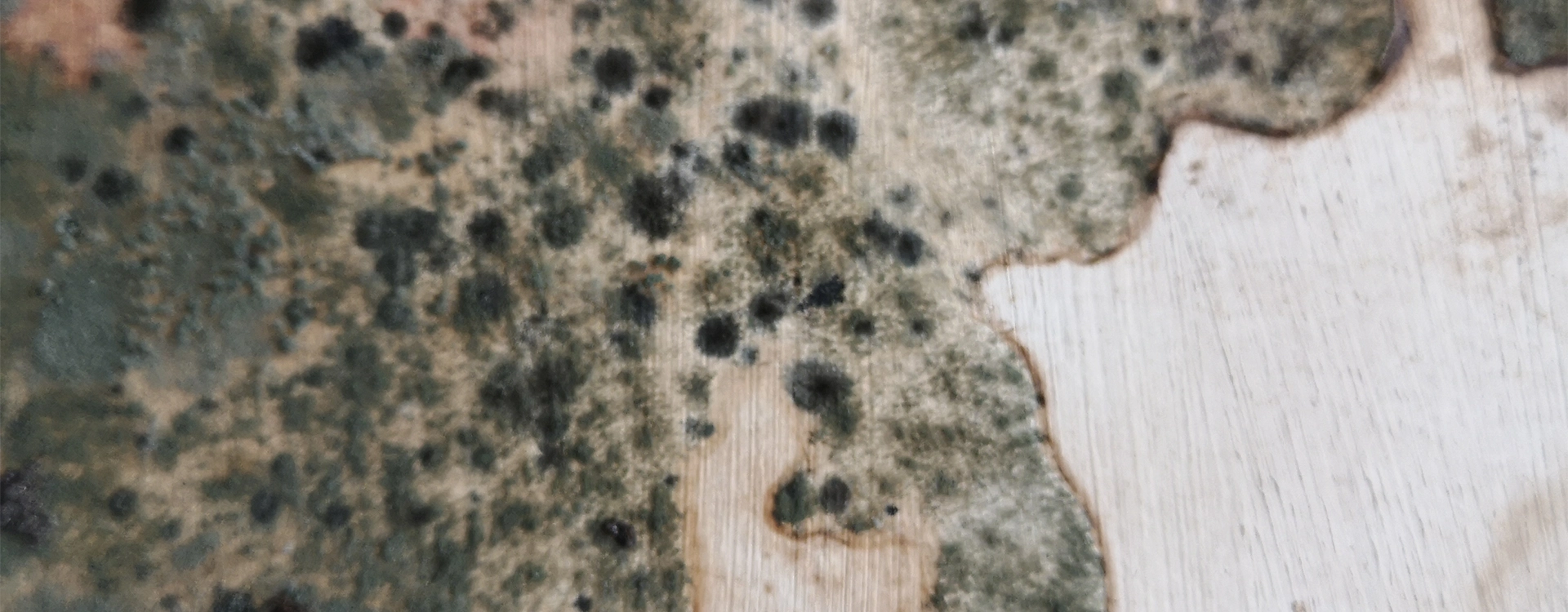
The exhibition
“THE ARTWORK AS A SUSTAINABLE FRAGMENT OF THE PRESENT”
Musée de la Fragmentation

In our expanding information cosmos, a new essential phenomenon is increasingly multiplying: an experience often encapsulated in a visual message accompanied by text, transmitted through the vast and boundless space of the internet as a global collector. The control algorithm performs an almost flawless selection of information, and only a small percentage of billions of fragments reaches the ocean’s shore, only to immediately remerge into the flow of the global collector and inevitable recycling in the next sequence. Our perception of reality is thus multiplied into an infinite number of realities projected onto our own plane—the flow of life, inevitably fragmented, erased by forgetting and the constant rewriting of the present, transforming it into a nonexistent past and future. There is no way to halt this flow of events and experiences or to grasp it in its entirety; there exists only an environment in a state of perpetual fragmentation. We can attempt to extract it, sample it through a cut and conservation process based on available technical capabilities.
The entity we have chosen to preserve in the Museum of Fragmentation is such a sample, a point of encounter and intersection between artwork and everyday life, a moment preserved regardless of its time, place, or origin.
In contemporary art, this means that the fragment brings an essential element back to the center of attention: the experience an artwork generates, irrespective of its age or form, bearing in mind the old truth that the same experience cannot be lived twice.
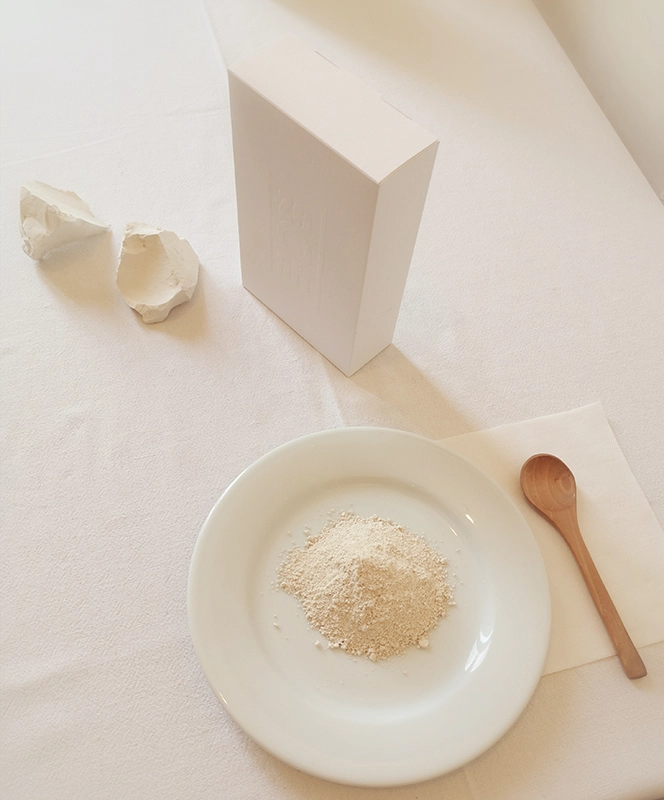

The Fragment is a cut, a symptom of contemporary art on the body of daily life. It has no limitation in place, time, space, dimension, technique, discipline, or form of expression. The fragment is an essential sample, a spark of an event, a moment of change, or its unfolding. The fragment is a work conveying an experience. It can remain open, unfinished, without a specific function. Any further verbal description would destroy the non-verbal essence of the image it represents. Not all works of art are fragments, just as not all fragments are artworks in contemporary art. A large number of fragments are irretrievably destroyed, forgotten, or overlooked, beneath or beyond the radar of attention. However, the invisibility, instability, or tendency of certain fragments to disappear, fall, or be erased does not diminish their value. By creating the Museum of Fragmentation, we establish a mechanism capable of recognizing, selecting, and preserving certain fragments and their memory. The fragment is an entity in itself. It may or may not be linked to its creator’s biography; the author sometimes remains anonymous, and the fragment functions independently in its interaction with the environment. It is a kind of non-verbal sentence that may sometimes include a verbal message. The fragment is an environment of experience, a document of ambiance